Cement-fiberboard products close the Township’s list. On a roof they usually take the form of fiber-cement slates or shingles, a way to get something close to a slate or tile look without the weight of either.
“Acceptable roofing materials include tile, slate, composition shingles, stone coated or standing seam metal and cement-fiberboard products. All metal roofing must be free of any types of glossy finish.”
Section 1.6.H.4, The Woodlands Residential Development Standards, recorded December 10, 2024
Cement fiberboard, usually called fiber-cement, is a mix of cement and cellulose fiber pressed into sheets and shapes. As roofing it is sold as flat or textured slates and as shingle profiles. The same family of material is used for lap siding and trim on many houses in The Woodlands, which is covered separately on the fiber-cement siding page.
For a house framed for shingle whose owner wants the look of slate, fiber-cement roofing is often the realistic route: heavier than shingle, but well below slate or tile in most product lines. It is also noncombustible, and it takes a muted color evenly, which suits the standard’s color rule.
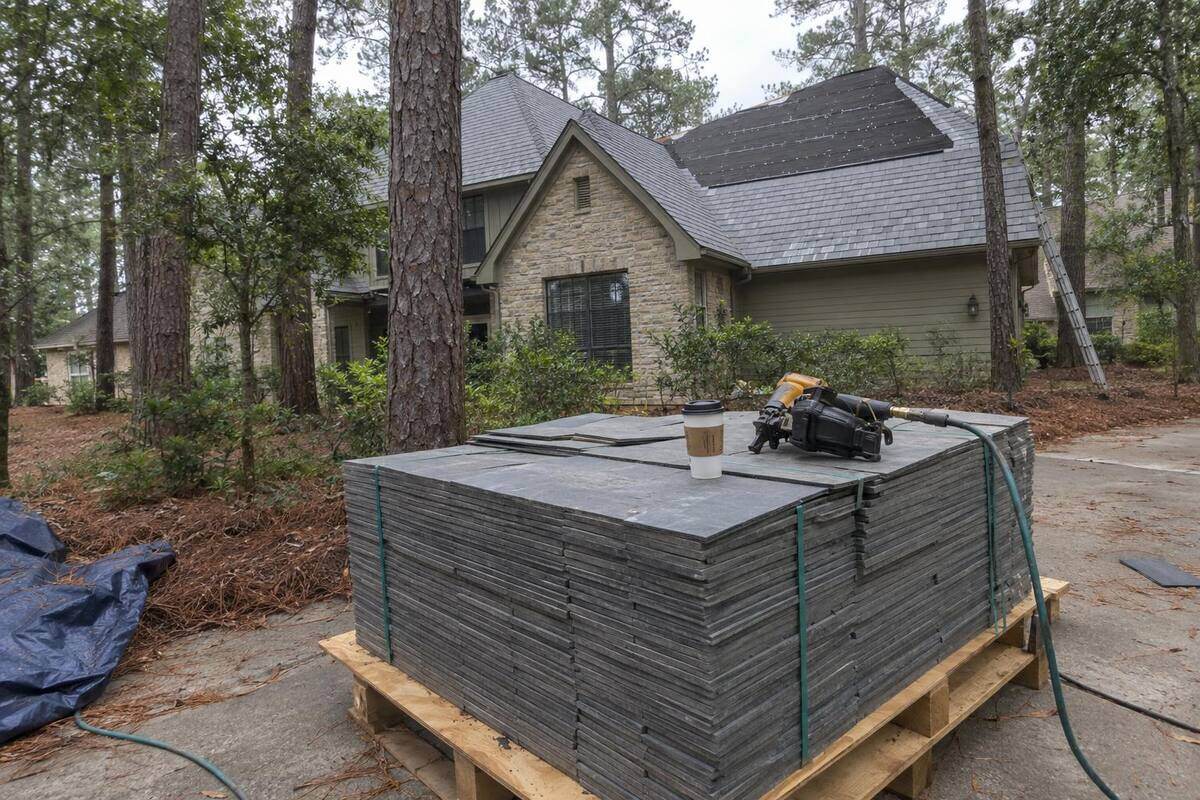
Fiber-cement roofing products vary widely by manufacturer and have changed over the decades; some older products had short lives and are no longer made. Ask what specific product is being quoted, how long it has been sold, and what its warranty covers. Ask how individual pieces are replaced after a limb strike, and whether the framing needs any check for the added weight.
As a general industry range, fiber-cement roofing commonly costs about one and a half to three times an architectural shingle roof installed. It is usually well under natural slate for a similar look.
Because it is a change of material for most houses, expect a full design review: a sample, the color, and how the profile relates to the house. Say plainly in the application that it is a cement-fiberboard product, the standard’s own term, so the committee can match it to the list without guessing.
Same family of material, different products. Roofing pieces are made and warranted for roof exposure; siding planks are not interchangeable with them.
The standard lists cement-fiberboard products separately, so describe it as that. It is approved either way.
Heavier than shingle, lighter than natural slate or most tile. Ask whether the specific product needs a framing check on your house.
A contractor can quote both, so the look and the load are compared on paper before the application goes in.
Call (936) 703-2063 Request an Assessment Woodlands Roofing