Fascia, soffit and trim sit where roof water, shade and wildlife all meet. They are usually the first wood on a house to fail, and fixing them is often the job that heads off a larger siding or roofing one.
Fascia behind the gutter. Years of gutter overflow rot the fascia board from the back. A sagging gutter is often a fascia problem.
Soffits. Vented soffits feed the attic its air. Damaged or blocked soffits shorten a roof’s life as surely as a missing ridge vent. Openings also let in squirrels, a regular visitor on wooded lots.
Corner boards and window trim. End grain at the bottom of corner boards wicks water. Trim around windows and doors rots where flashing is missing.
Woodpecker and bee damage. Round holes in cedar trim and siding, and the perfect half-inch holes of carpenter bees under eaves.
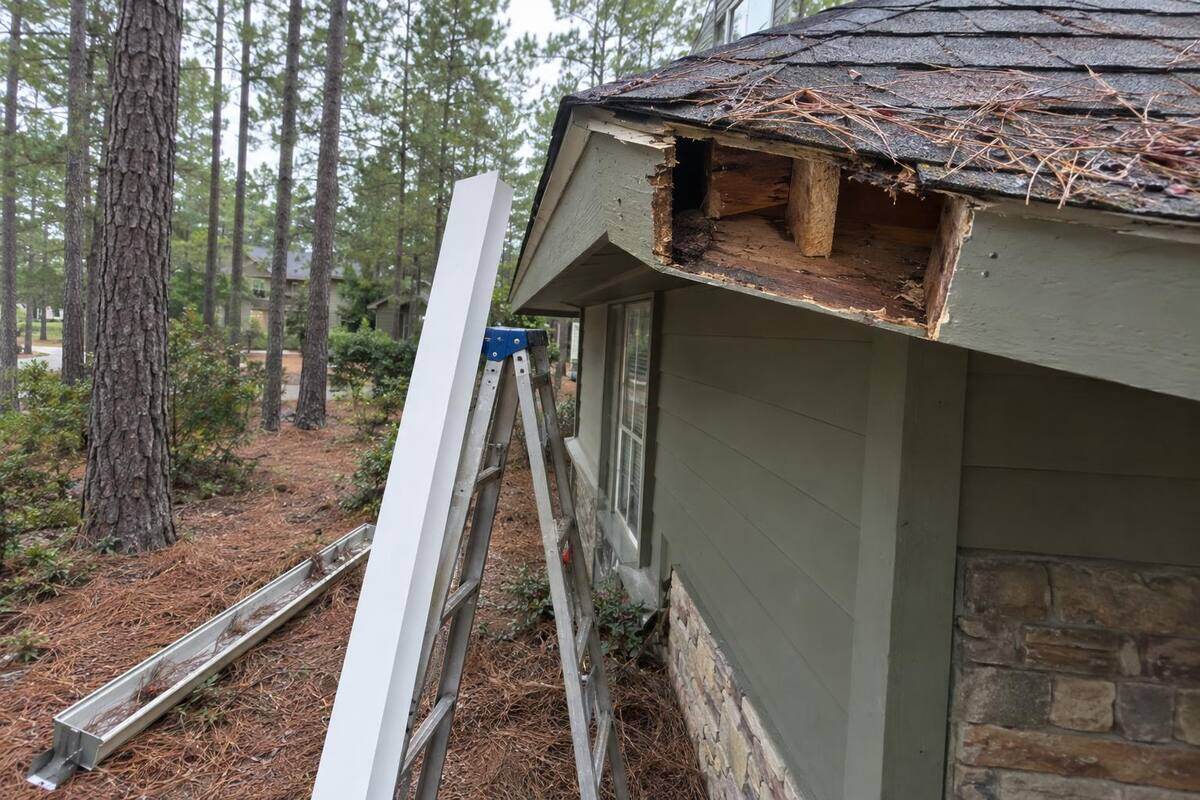
A repair that matches the existing material and color is maintenance. Replacing wood trim with a different material such as fiber-cement or PVC, or changing the color, is an exterior change that the standards treat as reviewable, and paint colors need chips with the application (section 1.5.II.D). Ask before switching materials on a visible elevation.
New fascia behind the same overflowing gutter will rot again. New trim under the same missing kickout flashing will rot again. A useful repair scope names the cause as well as the board: gutters, flashing, drip edge or clearance from the roof.
If the damage turns out to run through the siding itself, see cedar and wood siding replacement.
Sometimes the gutter can be taken down and rehung on new fascia. If the gutter is old or undersized, replacing both at once is common.
A change of trim material on a visible elevation is an exterior change. Ask Covenant Administration and submit a sample.
Often because insects are in the wood, or because the wall sounds hollow. Fixing the damage without addressing either tends to invite them back.
Say where on the house, and whether the gutter is involved.
Call (936) 703-2063 Request an Assessment Woodlands Roofing