Tile is on the Township’s acceptable list and suits the Mediterranean and stone-front houses found in several villages. Before any color conversation, the question is whether the house can carry it.
“Acceptable roofing materials include tile, slate, composition shingles, stone coated or standing seam metal and cement-fiberboard products. All metal roofing must be free of any types of glossy finish.”
Section 1.6.H.4, The Woodlands Residential Development Standards, recorded December 10, 2024
The standard says “tile” without splitting concrete from clay, so both are acceptable as materials. The color rule applies as it does to shingle: muted, and without color pattern. Many tile lines are sold in blends of two or three colors; a restrained blend can pass where a high-contrast one would not, which is why the sample goes with the application.
Concrete and clay tile weigh several times what composition shingle does per hundred square feet. A house built with shingle was framed for shingle. Switching to tile starts with an assessment of the rafters or trusses, and sometimes an engineer’s letter, before it becomes a design question. A house already roofed in tile was built for the load, and replacing tile with tile is a different, simpler job.
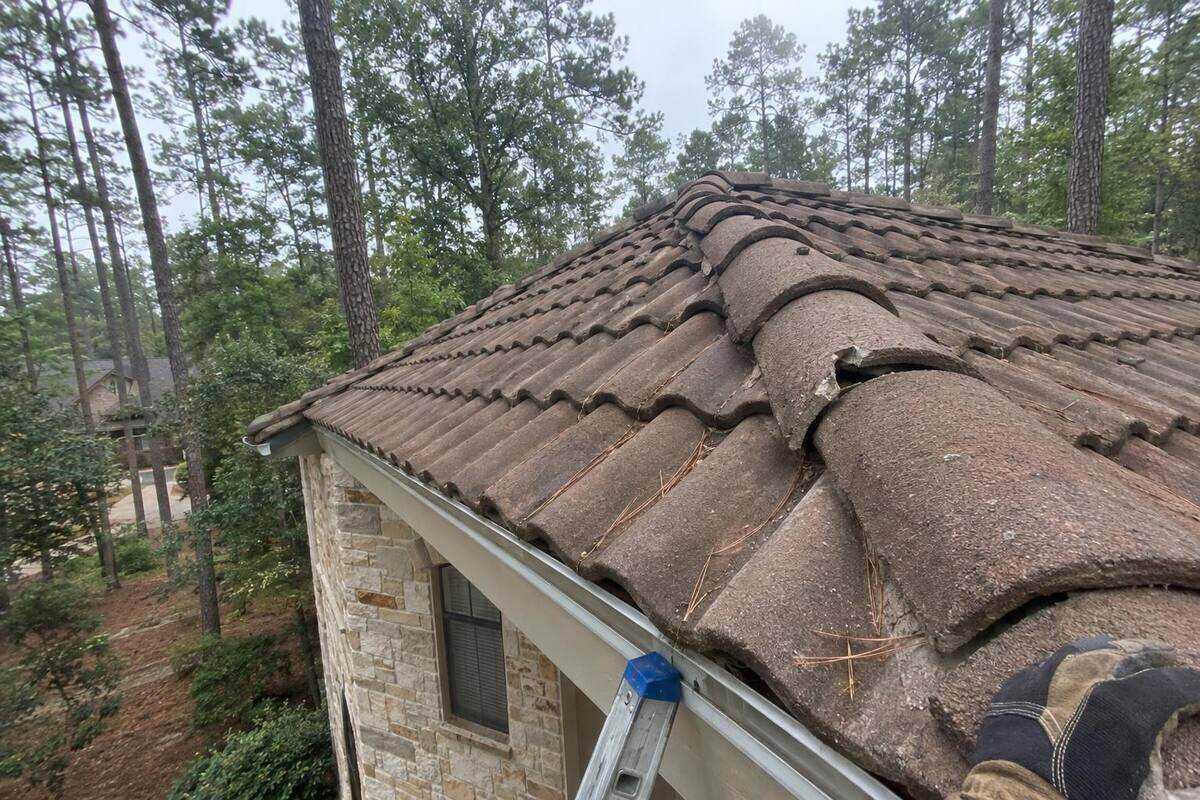
The tile itself usually outlasts what is beneath it. On older tile roofs the underlayment gives out first, and the job becomes lifting the tile, replacing the underlayment and relaying sound tiles with new ones where needed. Falling limbs crack individual tiles; walking a tile roof without knowing where to step cracks more. Ask how the contractor sources matching replacements, since discontinued profiles are common on roofs more than twenty years old.
As a general industry range, a tile roof commonly costs about two to four times an architectural shingle roof installed, with clay usually above concrete. Structural reinforcement, if it is needed, is on top of that. An underlayment-only rework on an existing tile roof can cost far less than new tile, which is one reason to have the existing roof assessed before assuming replacement.
Often, if the framing supports the added weight. Expect a structural assessment first, then a design review application for the change of material.
Both are approved. Clay holds color longer and costs more; concrete is heavier per piece in many profiles and costs less. The house’s style and the framing usually decide it.
The underlayment beneath the tile is the usual cause on older roofs. The repair is lifting and relaying tile over new underlayment rather than replacing the tile.
Say whether the house has tile now. That changes the first visit from a structural question to a condition check.
Call (936) 703-2063 Request an Assessment Woodlands Roofing